Poland: a country at the crossroads of history and modernity
Poland is a country that can learn from its own tragedies and turn them into a source of strength. To understand the Poles means to see in them a reflection of Europe itself: complex, contradictory, but always alive and striving for the future.
Poland is a country in the heart of Europe, located at the crossroads of trade and cultural routes. Today, it is one of the largest and most dynamically developing members of the European Union, playing a significant role in the politics of Eastern and Central Europe.
Here, a rich historical heritage, Catholic traditions, Western European pragmatism and Eastern European soulfulness meet. Poland has always been a country “in between” — between East and West, between empires, between tradition and modernization. And it is this “border” position that has shaped its unique character and inimitable mentality.
Historical context
The history of Poland is a series of ups and downs, brilliant victories and tragic defeats.
In the Middle Ages, Poland was one of the largest powers in Europe: the Polish-Lithuanian Commonwealth in the 16th–17th centuries stretched from the Baltic to the Black Sea and was considered a “republic of nobles.” The Poles were proud of their “golden freedom,” a system of elective monarchy in which the gentry had enormous rights.
However, by the 18th century, internal fragmentation and external pressure led to Poland being divided between neighboring empires — the Russian, Austrian, and Prussian. For over 120 years, Poland did not exist on the map of Europe, but it was during this period that a special sense of national identity was formed.
The Poles rebelled again and again — in 1830, 1863, and each defeat only strengthened their conviction in the right to independence. Polish culture, literature, and the Catholic Church became the main guardians of the nation. “Poland is the Christ of nations,” said the romantics of the 19th century, seeing a sacrificial purpose in the fate of their homeland.
The 20th century brought both liberation and new tragedies. After World War I, Poland regained its independence, but two decades later it fell victim to the Molotov-Ribbentrop Pact and was divided between Hitler and Stalin. Millions of Poles died during World War II, including almost the entire Jewish community of the country.
After the war, Poland found itself in the Soviet sphere of influence. The communist regime was unable to eradicate the spirit of freedom, and it was the Polish protests of the 1980s (the Solidarity movement led by Lech Walesa) that became one of the decisive factors in the collapse of the socialist bloc.
This historical memory – from the loss of independence to the fight for freedom – deeply influences the worldview of Poles and their attitudes towards themselves and others.
See also: Schengen, visa-free, ETIAS and temporary protection: a guide for traveling in the EU
Modern Poles
What are they like – Poles today?
First of all, this is a nation for whom three pillars are important: family, Catholic faith and national pride. Despite the processes of secularization, the Catholic Church remains an important institution, and holidays and rituals are connected with religious traditions. Sunday mass is still a familiar part of life for many Poles.
Family plays a central role: Poles value close ties, support relatives and often live in large families, even if young people strive for independence.
Hard work and discipline are qualities that are highly valued. Poland has undergone a major transformation after joining the EU in 2004, and millions of Poles have actively participated in the modernization of the economy. They are proud that the country has managed to transform itself from a peripheral economy into one of the leaders in the region.
But modern Polish society also has contradictions: some are guided by traditional values, others by liberal Western models. This creates tension between generations and regions. Young people, especially in big cities, are more open to the world, while rural Poland remains the guardian of conservative foundations.
Poles and other nations
Historical experience has made the relations of Poles with their neighbors complex and multi-layered.
- Germans. Hostility and mutual distrust, rooted in World War II, are gradually being replaced by pragmatic cooperation. Germany remains Poland’s main trading partner, but memories of the war are still alive in the public consciousness.
- Americans (USA). The relations of Poles with Americans are a mixture of admiration and pragmatism. The USA has long been a symbol of freedom and democracy for Poles, and millions of emigrants from Poland have found a new home there. American culture – cinema, music, lifestyle – has a strong influence on Polish youth. At the same time, Poles sometimes make fun of the superficiality and excessive optimism of Americans. Politically, the United States remains Poland’s main strategic partner, especially in the security sphere. For many Poles, America is an “older brother” to whom they can turn for support, but at the same time, a country that lives by its own, not always clear, rules.
- Czechs and Slovaks. Relations are warm and friendly, but with a slight ironic distance. Poles perceive Czechs as calmer and “lazier”, while they themselves are proud of their dynamism.
- Ukrainians. A complex symbiosis: the historical memory of the Volyn tragedy poisons the dialogue, but millions of Ukrainian labor migrants have become part of Polish society in recent years. Many Poles sympathize with Ukraine in the war with Russia.
- Belarusians. The attitude is rather neutral, with a touch of sympathy – as towards neighbors who find themselves in the shadow of an authoritarian regime.
- Russians. Wariness dominates here, sometimes turning into hostility. Historical grievances – the partitions of Poland, the Soviet occupation, the Katyn tragedy – still play a huge role.
- Lithuanians. Neighborly relations, but with hidden competition: both sides remember the old Polish-Lithuanian Commonwealth.
- Jews. Poland was the center of Jewish life in Europe before the Holocaust. Today, the country is going through a difficult process of rethinking this history: at the same time, there is a desire to remember and an attempt to absolve itself of some of the responsibility.
- French. France occupies a special place in the Polish imagination. Back in the 19th century, Paris was the “second capital” for Poles, where emigrants went after the uprisings against the Russian Empire. The French are perceived as a refined and cultured people, and France itself is a symbol of sophistication and intellectual influence. However, in everyday life, Poles can see the French as a bit arrogant and withdrawn. Despite this, respect for French culture, literature, philosophy and fashion remains very high in Poland.
- Spanish. The relationship between Poles and the Spanish is rather positive. For Poles, Spain is a country of sun, wine and lightness, a kind of “antipode” to their own seriousness and discipline. Polish tourists love Spain for its climate and hospitality, and the Spanish are perceived as a people who know how to enjoy life. At the same time, many Poles are surprised by the southern European “mañana” – the habit of procrastinating. In the Polish consciousness, the Spanish symbolize freedom, celebration and relaxation, but also cause admiration for their culture and art.
As for Western Europeans and Americans, here the Poles have a dual feeling. On the one hand – admiration and the desire to adopt Western standards, on the other – jealousy and suspicion: “Are they looking down on us?”
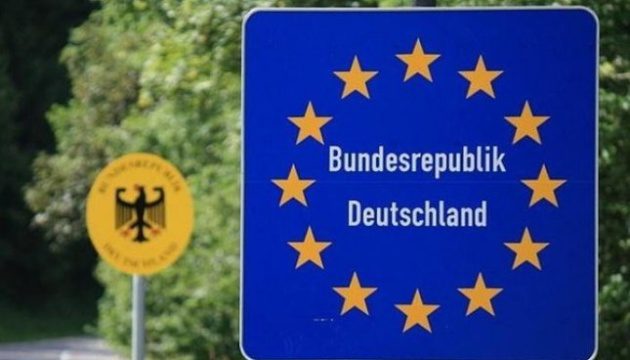
Польща перевіряє паспорти на кордонах із Німеччиною та Литвою. Не забудьте паспорт
Stereotypes and reality
There are many clichés about Poles.
- Stereotype 1: Poles are Catholics to the point of fanaticism. There is some truth, but the modern generation is becoming more and more secular.
- Stereotype 2: Poles are hardworking, but prone to complaining. Yes, Poles know how to work, but they also like to complain about the state or fate – this is part of the national temperament.
- Stereotype 3: Poles do not get along with their neighbors. Historically, this has been the case, but in recent decades, Poland has been actively building good-neighborly relations.
- Stereotype 4: Poles are a cheerful people. And it is true: they have a special sense of humor – sarcastic, sometimes even black, but always lively.
Social and cultural characteristics
Hospitality
Poles are hospitable, love to invite guests to the table, treat them generously and strive to show the best that they have.
Traditions and holidays
The main holidays are Christmas and Easter. Christmas Eve (Wigilia) is a special ritual with 12 Lenten dishes and oplatek (a special wafer plate that is shared with loved ones).
National cuisine
Polish cuisine is hearty and strong: bigos (stewed cabbage with meat), pierogi (dumplings with various fillings), zurek (sour soup), homemade sausage, doughnuts (ponczki) on Tłusti Czwartek (Fat Thursday). All of these are symbols of Polish identity.
Humor
Poles have self-critical and politically charged humor. They know how to laugh at themselves, at bureaucracy, at the government.
Political and social background
Politics in Poland always causes heated debates. In recent decades, the country has been balancing between conservative nationalism and liberal Europeanism. On the one hand, there are parties appealing to Catholic values, on the other, there are forces oriented towards Western standards.
- Poland actively participates in international processes, positioning itself as a defender of Eastern Europe from Russian influence. This creates a sense of “guardian of the West”, which strengthens national pride.
- Internal debates about the role of the church, women’s rights, the LGBT community and migration show that Polish society is going through a painful but necessary process of self-determination.
- Poles are a nation of paradoxes. They are simultaneously conservative and modernist, looking to the future; deeply religious, but capable of self-criticism; proud and stubborn, but open and hospitable.
- Their uniqueness lies in their ability to maintain their identity in the most difficult conditions. But at the same time, Poles are brought together with other Europeans by a common love of freedom, life and family values.